
The Introduction to Vladivostok
GMT +12 (London +12, Paris +11, Moscow +9, New York +17)
Phone Code: 4232 | Moscow: 9302 km,
Population: 700.000
In the family of Russian cities, Vladivostok is a wayward son: the kid who had all the opportunities but couldn’t quite get his act together. Vladik should be thriving—a port city on the edge of Asia—but every year 5,000 Russians move west, to
 |
 By Kevin McCaughey |
Moscow or Petersburg, while Chinese workers move in. Traffic is bad. Water shut-offs are common. Accommodation can be expensive, catering to visiting businessmen or groups of Chinese tourists. The restaurant/café scene is, for a city of such international locale, a little bleak.
But Vladivostok is an extraordinary place. China, the Koreas, and Japan are nearby, much nearer than even Lake Baikal in eastern Siberia. Moscow is a full nine hours away by air. But despite the Japanese cars clogging the streets, Vladivostok remains distinctly Russian.
It also happens to be one of Russia’s greatest wandering cities. So walk. Sopki, long-dead volcanic hills, give the city patchwork layer-cake effect. Buildings rise from different levels and eras: a gutted wooden house at the foot of a Krushchevsky apartment block, then a shiny new casino, and beyond that, sea and sky. On Pushkin Street the American Consulate’s next door neighbor is a burnt-out shell. Wherever you walk, you’re going up or down, and it’s a rare moment when you can’t get a glimpse of the sea.
Vladivostok is also a city where you can get away without leaving. Visit the Botanical Gardens and keep walking—you’re in the taiga. Explore the hills. Dug in are stone forts, with more on nearby Russky Island. If you want secluded beaches, you’ll have to make a small effort, but they’re out there too.
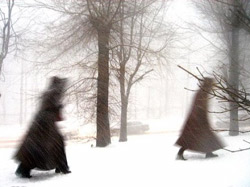
Even though Vladivostok is one of Russia’s most southern cities, a tad farther south than even sunny Sochi, the weather
|
 By Kevin McCaughey |
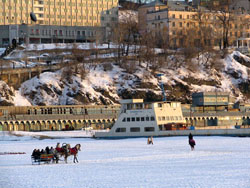
is just capricious. It may be overcast in May, sweaty wet in June, freezing with clear blue skies in January. Who knows? Be prepared for wind any time. In wintertime the sloping streets make walking downright dangerous, but sunsets over the frozen bay are gorgeous, and you’ll see the locals dressed the way you imagine Russians should be dressed. Perhaps the best time to visit is September to mid-October; the autumn gets a big share of clean, dry days—and the taiga is turning color.
Only 15 years ago Vladivostok was a closed city. Even Soviets needed permission to visit. Now it is a city in remont, a rebuilding process, with construction and (often picturesque) deterioration evident at every turn. It’s fascinating to observe the city as it waits for its future to figure itself out. Vlad is undeniably Russia, but economic ties to Asian neighbors are alluring, even while the great populations of those neighbors cause anxiety.
With its location and all its advantages, Vladivostok is sure to prosper sooner or later. Maybe soon Vlad will no longer be a wayward son, but will (as the name suggests in Russian) rule the East.
Most Recent Articles:

Vladivostok Transport

Sibirskoe Podvorie Hotel
