
A Bit of St. Petersburg History (and... it's not boring )
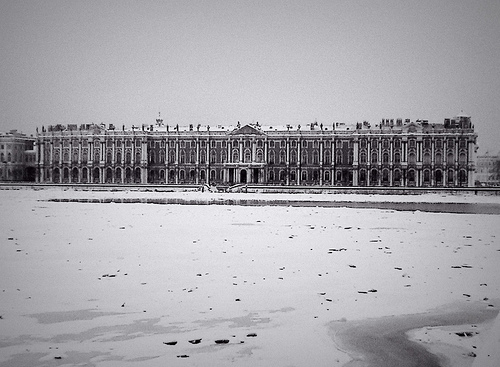
True to his decisive character, Peter ordered to get thousands of peasants to the area and cover the swamp with the ground. Many people simply died because of the hard manual labor and cold. The obsessive attempt to replicate Amsterdam on the swampy land worked out, after years of work and several thousand deaths. After the city was built, Peter ordered the rich merchants and intellectuals to move there from Moscow. Those who refused, risked getting out of favor with the emperor, so many followed the orders. That is why nowadays St. Petersburg is sometimes called the city on bones. There are also many myths about the city because of that legacy and some people still think that some sort of dark karma is hovering over the city.
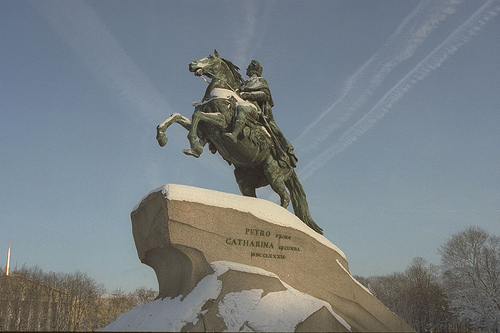
The history afterwards was no less turbulent:
1727- The first bridge across Neva river was built. Neva divided city into many parts and for many years different areas of the city were connected just by boats. So bridge-building has became the most important thing to do around the Peeter.
1803- The first Russian round-world sea expedition was started in the city.
1837- The first railway in Russia has begun operating. The route was St.-Petersburg - Tsarskoe Selo (residential of the emperors). For the next decades the rate of "railway length growth" in Russia was the largest in a world.
1863- City sewer system was opened.
1873- First try to use electricity to light the streets.
1882- Phone station was opened.
1895- First car in the city.
1905- The first Russian revolution happened in St. Petersburg. It was an unorganized riot, which was suppressed very quickly. But from then on the spirit of imminent change could be sensed in the society. People understood it was really the "first" try, the second would follow soon.
1914- The city was renamed into the Petrograd, because of the war with Prussia. To call something ending with "burg" was too German for the Russian capital.
1917- The October Revolution, the monarchy has been overthrown. Almost no destruction in the city.
1918- The capital was moved to Moscow. The communists wanted to start life afresh, they can't do it in the city of Emperors and nobles, so they moved the capital to not so aristocratic Moscow. A little bit later they renamed St.-Petersburg into "Leningrad", after Lenin, and started renaming other main cities as well (Ekaterniburg, Nigny-Novgorod) to get them rid of the Tsarist legacy.
1940- The first underground metro was opened in Leningrad. It was hard to build, because the city was close to the sea and there was too much water in the ground. Besides, there was a plan to use it as a bomb shelter in case of war, so in the end Leningrad metro ended up to be some of the deepest ones in the world. Even now you'd get surprised when you have to go down for 10 minutes in order to take a train.
1941- Leningrad was blocked by the Nazi army. Hitler wanted to capture the city destroy it fast. It was also a good strategic spot to continue the attack on Moscow. But the plans were ruined, although the city was completely blocked and memories of the blockade are still some of the most haunting in the Russian history.
1944- Blockade was raised. Thousands of people died of starvation during these years.
1989- The historical center of the city was added to the UNESCO list of world culture heritage.
2000- The World Hockey Championship took part in St. Petersburg. It was supposed to be our triumph, but became our shame, Russian team for the first time in its history became the 11th.
2001- Mr Putin, originally from St. Petersburg, became the Russian president and together with him came many politicians who used to work in the city. People talk about the arrival of "Piterskie" who are taking over from the Moscovitans and install a sort of new order in the country's political life.
2003- Thanks to the 300 year anniversary, the facades on the main streets were renovated, everything was made to look good, but a few meters off the main streets you can still find the old, shabby St. Petersburg that's falling apart, but that also keeps its unique charm that way.
Most Recent Articles:

Introduction to St. Petersburg

General Facts about St. Petersburg
