WayToRussia.Net Guide to Russia
 
    Made by Travelers from Russia for Travelers Worldwide Guide to RussiaTravel ServicesOur Team
    >> WayToRussia.Net / Expat / Settling in Russia
  expat
  teaching
settling
interviews
studying in russia
business guide
marrying in russia
shopping directory
 
  guide to russia
  what is russia
practicalities
transportation
russian visa
expat guide
destinations
talk lounge
life in russia
 
  travel services
  apartment rent
accommodation
airline tickets
train tickets
visa support 
transfer / taxi
tours
extra services
 
  our team
 

Settling in Russia - How to Find Accommodation, Job, and Friends


Why Russia?

Not that long ago people would write off Russia. They said the country had failed to take to capitalism as it should have and was insignificant on the world stage.
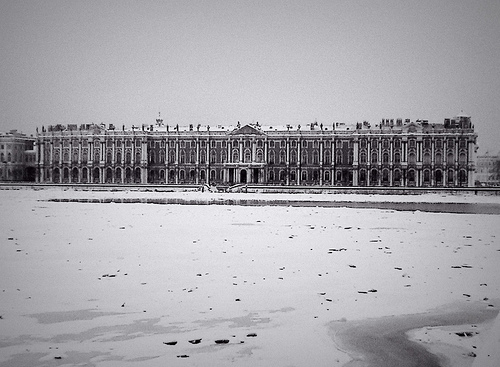
Kremlin, Mosow - by Kirill Chaplinsky
photo by Kirill Chaplinsky
Learning the language was pointless, working or doing business there was fraught with risk and the visa regime was too strict to make travel worthwhile. But whether this was true or not, it would be a brave person who would say such things now. With stable, steady growth and huge energy resources, Russia has once again emerged as a world power, one that will become even more important in the next decades. Russia has now attained a status it hasnÕt enjoyed since the Soviet Union fell. Whether you come here to work or study, having lived in Russia and/or being able to speak Russian is a major bonus to have on any CV.

But thatÕs just the pragmatic side of making the choice to live in Russia. Or maybe a good justification (and a genuine one) for having the chance to experience what is a remarkable country. The legacies of RussiaÕs recent history as the USSR, fascinating to so many people, are still a major part of the country. The culture is unlike anything you will experience in the rest of Europe. The sheer size of the country is mind-blowing, home to so many natural wonders and such diverse peoples. Living in Russia is a life-changing experience. ItÕs not always easy and itÕs often an incredibly frustrating place to live, but there is always something new to see, something new to do and something new to learn from living here.

For those who wish to study Russian language in Russia, there are a wide variety of schools in a number of different cities to choose from. It is also possible to obtain a full degree at one of the countryÕs universities. Some, like Moscow State University, have an outstanding international reputation. See section 8 for more detail. Those who wish to come to Russia to work (See "Finding a Job" section) will find a country with plenty of opportunity. You shouldnÕt expect to make your fortune here, but you can expect to find a job in Russia without too much difficulty.


Meeting People (Making Connections)

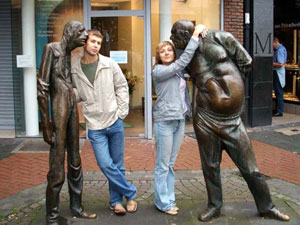
Unfortunate though it is, as a foreigner living in Russia, it is easiest to make friends with other foreigners. Of course, you will make friends with Russians over time as both the language
Meeting people in Russia - photo by Sasha Reshetilov
photo by Alexander Reshetilov
barrier and culture shock decreases, but there is no reason to be ashamed of making friends with other expats. The fact is that they are better able to understand the situation youÕre in and the problems you might have when you first arrive.

Meeting other foreigners is not a problem. A great way to network and meet people is to join one of the many social or sporting clubs with a largely foreign membership. Among these are the Moscow Dragons rugby club (http://www.moscowdragons.org/), the Hikers, Walkers and Nature Lovers club (www.hike.narod.ru) and the Moscow branch of the Hash House Harriers (www.moscowharriers.itgo.com), a self-described Òdrinking/social club with a running problem.Ó There are also expat soccer, hockey, tennis and Frisbee clubs in Moscow. For women there is the International WomenÕs Club, The American WomenÕs Organization, the British WomenÕs Club and The Asia-Pacific WomenÕs Group. In fact, just about every nationality has their own womenÕs group.

Other useful groups include the Moscow English Conversation Club (www.mecc.ru), which is always seeking foreigners to come along and chat with locals who want to practice their English. For the creative, the Rabbit Hole, which is held at FAQ Cafe (add link) every second Sunday, is a place where you can go and perform English-language prose, poetry and songs to a friendly and welcoming crowd. And anyone with a good voice might be interested in joining the Moscow Oratorio Society. There are numerous other clubs and groups such as these. A good place to find them is to check out the Community Bulletin Board in the Wednesday edition of the Moscow Times.

Not only do the above groups provide a comfort zone where you know you will find other foreigners and English-speakers, they also have a significant Russian membership or attendance (other than the womenÕs clubs). Therefore, joining one of these groups is a great way to meet locals who share a similar interest. Even if youÕd never join such groups back home, they are great places to make friends in a strange, new country.

Another good way to network is by attending the local embassy functions. Most foreign embassies in Moscow have a social function once a month with all natives of that country welcome to attend. They usually feature cheap drinks and an odd assortment of expats from whatever your country might be: from language teachers to wealthy businessmen. Phone or drop in to your embassy to find out details.

If that sounds too stuffy then try one of the expat hangouts. There are several bars that have at least fifty per cent foreign clientele. The Irish pub SilverÕs is very popular with British expats and is one of the friendliest bars in Moscow. Elsewhere, anything owned by Doug and/or Marty (The Boarhouse, Bleachers, etc.), is bound to be teeming with expats. As are most of the cities pubs (add link). Even if youÕve never gone into a bar alone in your life, youÕll be surprised at how easy it is to meet people at these venues.

If you have a personal interest or hobby back at home then pursue it here. If youÕre a religious person then head along to church. There are Catholic, Protestant, Anglican, Baptist and Jewish churches with English language ceremonies in Moscow. If youÕre into any genre of music then the smaller, underground concerts are always a good place to meet people. These might be a little harder to find and the best way to do it is to keep an eye out for posters around the streets or check the Russian-language press. Once there, youÕll find that most of your fellow concert-goers will be surprised to find foreigners in their midst and will be more than happy to talk to you. Even go and talk to the band after the show. Generally theyÕll be delighted to hear that a foreigner enjoyed their music. Similarly, you could join an art club or take dancing lessons. You wonÕt find as many foreigners at these places but the people you meet will generally be very friendly (so long as you share a common language). Even if youÕre not really into whatever activity you choose, itÕs worth going along for a while until you make some friends and then you can quit. Terrible though the magazine might be, the English-language Element usually has some good information on local clubs of all sorts of varieties.

In short, the best way to meet people is to throw yourself into things that you might not normally bother with back home. If itÕs absolute torture then it can be a once-off, and that once-off might just make you a very valuable contact or friend.


Finding a Job in Russia

Foreigners arenÕt as in demand as they once were but there is still plenty of opportunity in Russia and in Moscow in particular. The mythical times that long-term expats will tell you about with moist eyes, when the foreigner was king in Russia, are now long gone. These days the majority of top jobs are filled by locals and unless youÕre coming here with bucket loads of cash itÕs going to be difficult to make your mark in business.

That said, there are still lots of job opportunities for foreigners which usually pay a little bit better than the average Moscow salary.

English teaching is the obvious option and is the profession that employs the majority of expats you will meet. Teachers should choose their school carefully. There are many tales in Russia of dodgy schools that donÕt pay
Teaching in Russia
their teachers, or renege on their contracts. The safest option is to work for one of the internationally known schools that have Russian branches (BKC, Language Link, English First, etc.). Of course these schools also have their fair share of disgruntled former employees, but in general they are safer. The salary offered by the major schools is very low: as little as $500 a month or even less (plus an apartment on the outskirts of Moscow). Read more about Teaching in Russia in our Way to Russia Expat guide.

The smaller schools who deal in in-company classes or that are aimed at business clientele often pay better, but there is the risk that they wonÕt honor their agreement with you. If you donÕt want to work for one of the major schools, then your best bet is to contact a number of the smaller ones and shop around. When you have a few options, head to Russia and see which option is the safest or best. Finally, if youÕre good at making contacts, private teaching is a great money spinner. The minimum for an academic hour is $20 while if you find the right client and are good at talking yourself up, $50 an hour is quite possible. The average price is about $30 an hour. You will never be out of work as an English teacher in Russia.

Working as a nanny is another job you can pick up with very little experience. It might not sound too appealing but the potential pay packets could change your mind with salaries around $4000 a month plus an apartment. The working hours can be inconvenient but keep in mind that this sort of cash isnÕt too far off what youÕd be paid while living in a compound in Saudi Arabia. The other freely available jobs revolve around proof-reading, editing and writing. Native English speakers are always needed for these positions, which are generally lowly paid, but still above the average Moscow salary and roughly the same as what English teachers earn.

For those trained in a specific field, itÕs just a matter of searching. Foreigners are still required in many key positions in areas such as management and sales. However, advanced Russian language skills are becoming more and more important in securing these jobs. The best places to look for work are www.expat.ru/vacancies.php (for jobs in Moscow, mainly teaching, nannying and editing), the Moscow Times career center (www.careercenter.ru), the jobs section of the St Petersburg Times (www.sptimes.ru), a major Russian job vacancy website Headhunter (www.hh.ru) and Kelly Services (www.kellyservices.ru).

As for whether to secure work before heading to Russia or just taking the plunge and hoping for the best, it really depends on your own courage. The fact is that even if a company does offer you work before you come, in most cases it will still be difficult to get a contract or visa support from them. Really, the most prudent option is to try to get several expressions of interest from different companies and then head to Russia assuming that one of them will work out. Above all, when looking for work in Russia you must always remember that the mere fact you are a native speaker of English makes you in demand. There is still a lot of opportunity for the foreigner in Russia, even if they are no longer king.


Watching the Russians

Russian Character: DonÕt expect Russians to be like other Europeans. Two main things will strike you when you first arrive: firstly, customer service is atrocious and, secondly, Russians can appear very blunt and/or rude people. And while youÕll probably never get used to the bad service (the incompetence will still have you pulling your hair out after years in the country) you will come to grips with the Russian mentality much more quickly.

At the start of the your time here the frustrations will mount quickly: the inability of Russians to queue in a straight line,
their tendency to push in front of you in queues, the fact that people in any position of authority will do their best not to help you but will instead use their meager amount of power to make things difficult for you. To new arrivals it may seem shocking to be greeted at a shop with the word, ÒSpeak.Ó Or to have a cashier reply, ÒWhy do you careÓ when you ask them how they are. Or to be unapologetically pushed and shoved as you walk along the streets or in the metro. But soon enough you get used to it and adopt the old ÒWhen in RomeÓ adage. ItÕs a different culture and a different way of looking at the world. Instead of letting it frustrate you, try to enjoy it, try to understand it, and try to learn from it.

A very good way to get an insight about Russian mentality is to read our Russian People Interviews.

Blending In: The chances are you will always stand out as a foreigner in Russia no matter how hard you try. Russians say they can tell a foreigner by their eyes and after being in Russia for long enough you will be able to do the same. Trying to attain the Russian appearance cannot be simplified to statements like, ÒDonÕt smile,Ó or ÒLook angry all the time.Ó But study the faces of the locals and over time itÕs not impossible to adopt the same expression. For what? Well, thereÕs no point really except that itÕs hard to feel like you belong in a country when people are always staring at you, no matter how harmless their intentions might be. And itÕs always a kick the first time someone gets a shock when they find out youÕre not Russian.

Safety: Russia is a surprisingly safe place. It is very rare to be physically threatened, there are not a lot of pickpockets and the scams running here arenÕt particularly clever. However, people of smaller build or stature tend to get hassled more than the larger variety. Whenever you hear of a foreigner being mugged in Moscow, itÕs generally a little guy. And, although itÕs a shame to have to say so, racist attacks on people with darker skin are a problem in Russia. While the chances of it ever happening to you might be marginal, it does need to be mentioned. Just keep in mind that there are only a handful of attacks on dark-skinned people in all of Russia each year (not including attacks on people from Central Asian countries).


  Privacy Policy | Terms of Use
© 2003 Dmitri Paranyushkin / WayToRussia.Net. All rights reserved.
Ask Us a Question
Feedback